
Inspect before committing a target
Tap an enemy card to open its threat detail. The panel shows current vitality and armor, the vitality damage your strike would deal, and the next response. Use TARGET THIS ENEMY to select a different threat, KEEP TARGET to retain your selection, or BACK TO BATTLE to leave. Inspection does not spend a turn.
The displayed incoming damage already includes current noise, special attack bonuses, SIGNAL disruption and an active Quiet Index reduction. Do not add those modifiers again. CHARGE and REPRINT are actions without an attack, rather than hidden damage numbers. Read the explanation below the value to understand what the enemy will do if it survives.
Barrier absorbs incoming attacks first, and remaining damage reaches vitality. All surviving threats share that same shrinking barrier pool. Cablegrub can also siphon barrier before attacking, so its attack number does not describe every possible change to your defenses.
Use the strike preview, including guards
Your selected target takes the main strike first. Armor absorbs damage and decreases by the amount blocked; remaining damage reaches vitality. A living Turnstile also reduces each hit against its ally by three, before armor. The strike preview accounts for this guard, so adding armor and vitality alone is not enough when a guard survives.
An active LIVE circuit then arcs to other living enemies. A threat defeated by either hit loses its response. If all enemies are defeated, the room clears immediately. Otherwise SHELTER restores barrier, survivors respond, and item healing follows if you remain alive. Healing cannot rescue you after a lethal response.
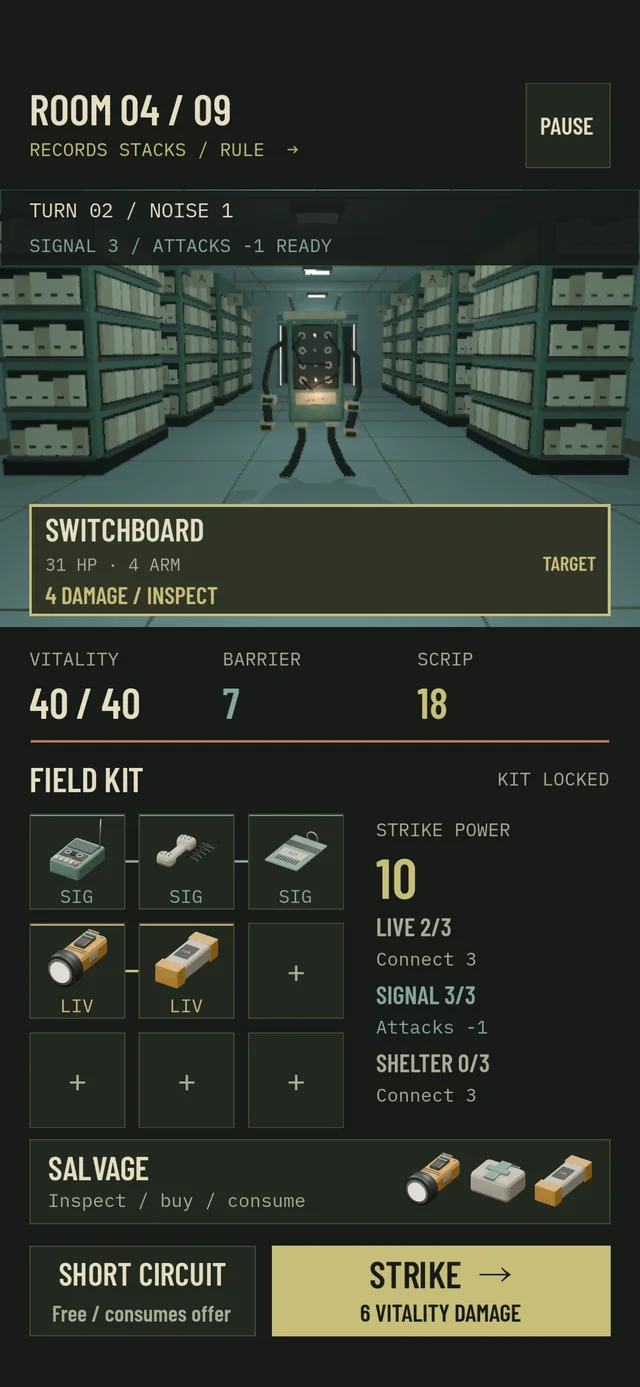
Counter siphons and rebuilding armor
Cablegrub siphons on every second turn. Before attacking, it steals up to four barrier and heals by the amount stolen, capped at its maximum vitality. SIGNAL 3 prevents the siphon. Without that connection, defeating Cablegrub before its second-turn response can save barrier and prevent recovery. It still attacks when there is nothing to steal.
The Clerk restores up to four armor after its attack on every second turn, capped at its starting armor. Focused damage can finish it before another rebuild. DEAD AIR prevents rebuilding while SIGNAL 3 remains connected. SIGNAL alone reduces attacks and grounds Cablegrub, but does not stop the Clerk restoring armor.
Recognize the four changing threats
Photocopier alternates attacks with REPRINT. On a repair turn it makes no attack and restores up to six vitality to its most injured living ally after your strike. It cannot repair itself or revive a defeated enemy. Finish the ally before repair, or silence the copier to remove repeated recovery.
Switchboard alternates a harmless CHARGE turn with SURGE, which adds six to its attack. SIGNAL 3 grounds that extra six; its normal attack remains. The charge provides time to strike or use Short Circuit, but another enemy in the same room can still attack during that opening.
Turnstile guards its living ally against every hit, including arcs, reducing each by three. Defeat the guard to expose that ally. Receipt Moth instead gains one attack for each turn it has survived, up to six extra attack. Removing the moth early prevents its escalating pressure.
Plan around strong turns and sector timing
The Usher adds four attack every third turn; the Auditor adds six. Their displayed intent already includes the bonus when it is due. Short Circuit can be valuable when its temporary power lets you defeat a threat before that stronger response. Always compare the updated strike preview after choosing a boost.
Noise adds one attack per four completed turns on Standard and Night Shift I, per three on Night Shift II, and per two on Night Shift III. It affects attack turns. Records Stacks can reduce incoming attacks on even strikes with SIGNAL 3; Service Annex can strengthen every third direct strike with LIVE 3. Read the room rule alongside enemy intent.
New shifts vary the encounters in the middle rooms. Inspect the actual enemies rather than assuming the previous shift will repeat. Later sectors and optional Night tiers change enemy statistics; an older resumed shift can retain its original rules. The visible detail and rule state are your reference for the current encounter.
A couple of details.
Does selecting or inspecting an enemy spend a turn?
No. Selecting a target and reading its detail do not resolve an attack. STRIKE commits the turn. You can compare the threats before choosing where your main damage should go.
Why did I lose more barrier than the attack number suggested?
An ungrounded Cablegrub may siphon up to four barrier before its second-turn attack. Other surviving enemies also use the same barrier pool. Read every surviving card and its special behavior, not just one attack number.